The Palmera Motif
- Mar 11
- 3 min read
There are some motifs that have the magical power to cross cultures and span time.
The palmera, or palmette, is one such motif. It appears frequently painted onto Ancient Greek amphorae and is also a recurring feature of traditional retablo art from northern New Mexico.

Photo by ArchaiOptix

Artwork by Gustavo Victor Goler
The palmette design, with its earliest associations to Ancient Egypt, has ties to funerary rites. You can see this tradition of palm branches or leaves representing eternal life in Catholicism, specifically on Palm Sunday. This association was adopted by early religions from Mesopotamia, then Ancient Egypt, later Greece and Rome, and eventually found its way into Catholic iconography and symbolism. The palm leaf’s tessellating structure, the way the leaves grow continuously from the branch, and its long, arching form served as a way for the Ancients to represent longevity, eternal life, and the continuation of existence into the next world.
But the palm leaf didn’t only symbolize eternal life in ancient history. For the Greeks, it also represented victory, which is why it was painted along the edges of amphorae given to champion athletes during competitions.
The palmette design also closely resembles the scallop shell, adding another layer of meaning when the motif itself transforms into something else. A symbol can easily shift significance when used in a different culture or context. Here is an illustration from this article where you can see the “bunching” of palm leaves that clearly resembles a scallop shell, though it is actually meant to represent grouped palm fronds.

In northern Spain, if you walk the Camino de Santiago, you’ll follow the scallop shell motif, which is placed on its side to guide pilgrims toward the city of Santiago in Galicia. In this instance, the shell becomes a symbol of pilgrimage, representing a traveler’s quest and spiritual journey. The scallop shell stands for Saint James, or Santiago, to whom the pilgrimage is dedicated. Here is an example of this symbol, which you can see throughout northern Spain.

The design of the palmera motif traveled with the Spanish colonizers and eventually made its way to New Mexico. This can be see with several design motifs common in the Spanish Colonial arts of New Mexico. The Spaniards brought artisans and tradesmen with them to establish their own ways of life upon the land and its peoples.
In northern New Mexico, Spanish communities remained relatively isolated for centuries and lived near the Indigenous Pueblo peoples. They traded with one another, exchanging not only goods but also ideas, art, and design. These designs have been preserved through continuous practice, passed down from generation to generation, and have become an integral part of the New Mexican design aesthetic.
Here in New Mexico, the palmera motif appears most often in religious art. Artists continue to work in tin and wood to create religious retablos, often placing a palmera at the top of each portrait. With its ties to Saint James, the motif came to New Mexico through the enduring practice of Catholicism in the region. The palmera, or scallop shell, represents the quest, the spiritual journey, and eternal life. In New Mexico, it embodies all of these meanings.



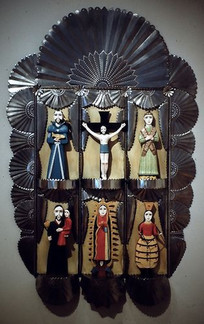


I chose the palmera for my logo for all of these reasons. I love its layers of history, how it traveled from the Mediterranean to the Southwest, and how it represents everything from death to eternal life, from the traveler to the spiritual seeker. It is a powerful symbol that connects us to the Ancients, to the lands around us, to the journeys we have taken, to those we still wish to take, and to how it all relates to adornment and self-expression.
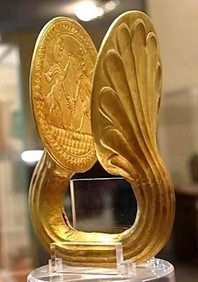
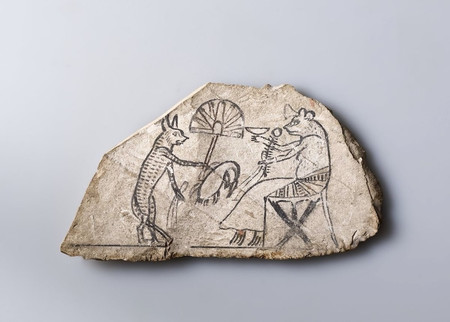
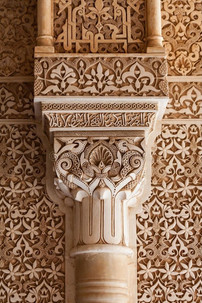
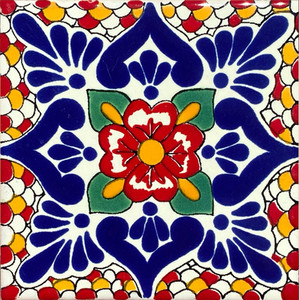
To conclude, here is a gallery to showcase the variety of ways that the palmera design has been used throughout history and across cultures:









Thanks so much for reading.
Take care,
Caitlin
Further Reading:


Comments